


Protecting our Youth: A Call for Community Stewardship
Children should not have to carry the weight of adult political battles.
The Appalachian Juju Public Interest Project believes every child deserves safety, dignity, belonging, and the chance to grow without being turned into a talking point.
This page is a home for issues affecting children and young people throughout Appalachia. Some concerns may begin in a courtroom, legislature, school-board meeting, agency office, or community debate.
Our purpose is:
- to explain what is happening in plain language
- show why it matters here
- help ordinary people respond
We will not treat children as symbols. We will listen to the young people, families, educators, and communities who live with the consequences.
Why This Page Exists
Protecting children cannot be reduced to one political argument.
Issues involving education, health, safety, hunger, housing, disability access, discrimination, privacy, and community belonging may all affect whether a child feels protected and valued.
The issue may change, but the basic question remains:
Are we protecting children, or are we asking children to absorb the cost of adult decisions?

Current Featured Issue:
Trans Youth, Sports, & Belonging
Across the country, lawmakers, courts, school systems, and athletic organizations are deciding whether transgender students may participate on teams that reflect who they are.
The legal language can be complicated and often twisted into one political party vs. another, one perspective is moral and one isn't. It isn't that simple. Life rarely is.
The correct question to ask is:
What happens to the child who is told there is no place for them?
Sports are about more than a score.
For many young people, a team may be where they find friendship, structure, confidence, encouragement, and a reason to feel connected to their school.
Rules that single out a small group of children can reach far beyond the playing field. They can tell a young person that their presence is a problem before anyone has taken the time to know them.

Why Belonging Matters in Appalachia
In a small town or rural school, children may have very few places to find their people.
There may be one school, one team, one community center, one church youth group, or one safe group of friends.
Being pushed out may mean losing far more than a game.
Exclusion can carry farther in a place where everybody knows everybody.
Appalachian communities often speak with pride about loyalty, neighborliness, family, and not leaving our own behind. Those values should include children whose lives or identities may be different from our own.
But isn’t that part of what makes us Appalachian?
We grew from a place shaped by blended cultures, locations, peoples, traditions, and beliefs. Appalachia has never been only one kind of person or one way of living.
Our strength has always come from what different people carried here, shared here, adapted here, and made together.
A child does not have to be exactly like us to deserve protection.
What We are Asking
We are asking decision-makers to:
- Treat every child with dignity.
- Protect the privacy of students and families.
- Listen directly to young people who are affected.
- Avoid turning individual children into political examples.
- Consider the full effect exclusion can have on school and community life.
- Account for rural schools where another team or activity may not exist.
- Create clear appeal and review procedures.
- Build policies around care, fairness, privacy, and actual local circumstances.
- Preserve opportunities for children to participate, connect, and belong.
And to trust systems long in place like sportsmanship, coaches, school & community sports organizations to do the job they have been doing for years:
Base any needed exclusion on the individual behaviors of that child and bench, suspend, and exclude that child like any other showing the same behavior on the field.

Ways to Take Action
Read the Original Policy
Look for the actual law, court decision, school policy, athletic rule, or board proposal.
Do not rely only on headlines or social-media summaries.
Follow What Happens Next
Record the policy name, decision-makers, meeting dates, court dates, deadlines, and promised follow-up.
Separate confirmed facts from public claims and unanswered questions.

Take Action: Connect with Change-makers
Depending on the decision, that may be:
- A school-board member
- A superintendent
- A principal
- A state representative
- A state senator
- A state education official
- An athletic association
- A governor or state agency
- A member of Congress
Before adults make rules about children they may never meet, they should listen to the young people and families who will live with the consequences. Every child deserves dignity.
Every child deserves a place in their community.

Send a Letter
A ready-to-personalize letter is available for people who want to ask officials to protect student dignity, privacy, participation, and belonging.

Write to Your Local Paper
A letter to the editor can remind the community that real children
- not political symbols -
will live with the decision.
Help Others Understand
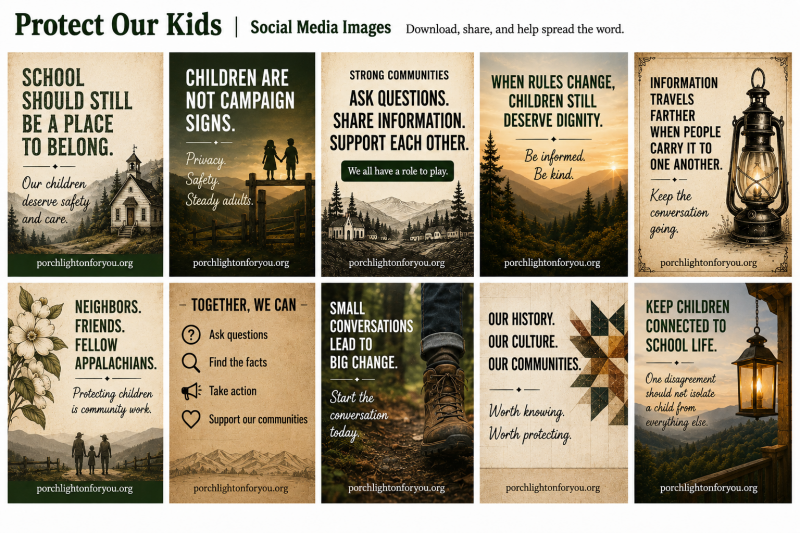
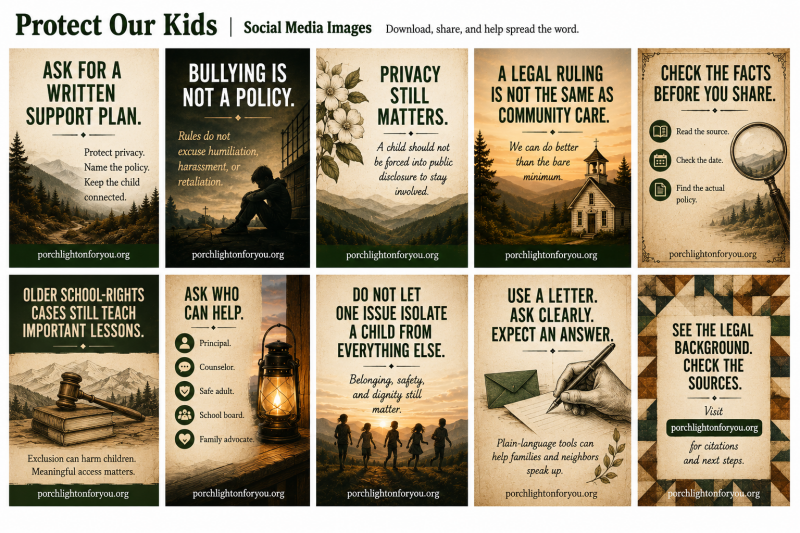
Share reliable information, plain-language captions, images, and reminders that
children deserve to be spoken about with dignity.
Most importantly, start the conversation with family and friends making sure they know all the information and share points of view they may not have thought through.

What Older School Rights Cases Can Teach Us
Let me be very clear.
This issue is not the same as school segregation. Racial segregation has its own history, its own wounds, and its own legal record. We do not need to flatten those histories to learn from them.
But older school-rights cases do teach a lasting lesson: when the government makes rules for children in public schools, those rules can do more than sort paperwork. They can shape whether a child feels safe, welcome, and fully human.
In Brown v. Board of Education, the Supreme Court said public schools could not separate children by race and still call that equal. The Court recognized that school separation can harm children even when adults claim the separate system is fair.
In Lau v. Nichols, the Court recognized that giving every child the same thing on paper does not always give every child meaningful access to education. Some children need the school to pay attention to their actual situation.
In Plyler v. Doe, the Court refused to let children be pushed out of public education because of a political fight around immigration.
Those cases are not identical to today’s debates about transgender students. They should not be used as if every struggle is the same.
But they do remind us of something important:
Children should not be used as symbols in adult political battles.
A school rule may be legal and still be harmful. A policy may sound neutral and still isolate a child. A community can choose to do better than the bare minimum required by a court.
Protecting kids means asking more than “What can the law get away with?”
It means asking:
Does this child still belong here?
Is this child safe?
Is this child being singled out?
Are adults making room for dignity, privacy, and care?
The law keeps changing. Our responsibility to children does not.